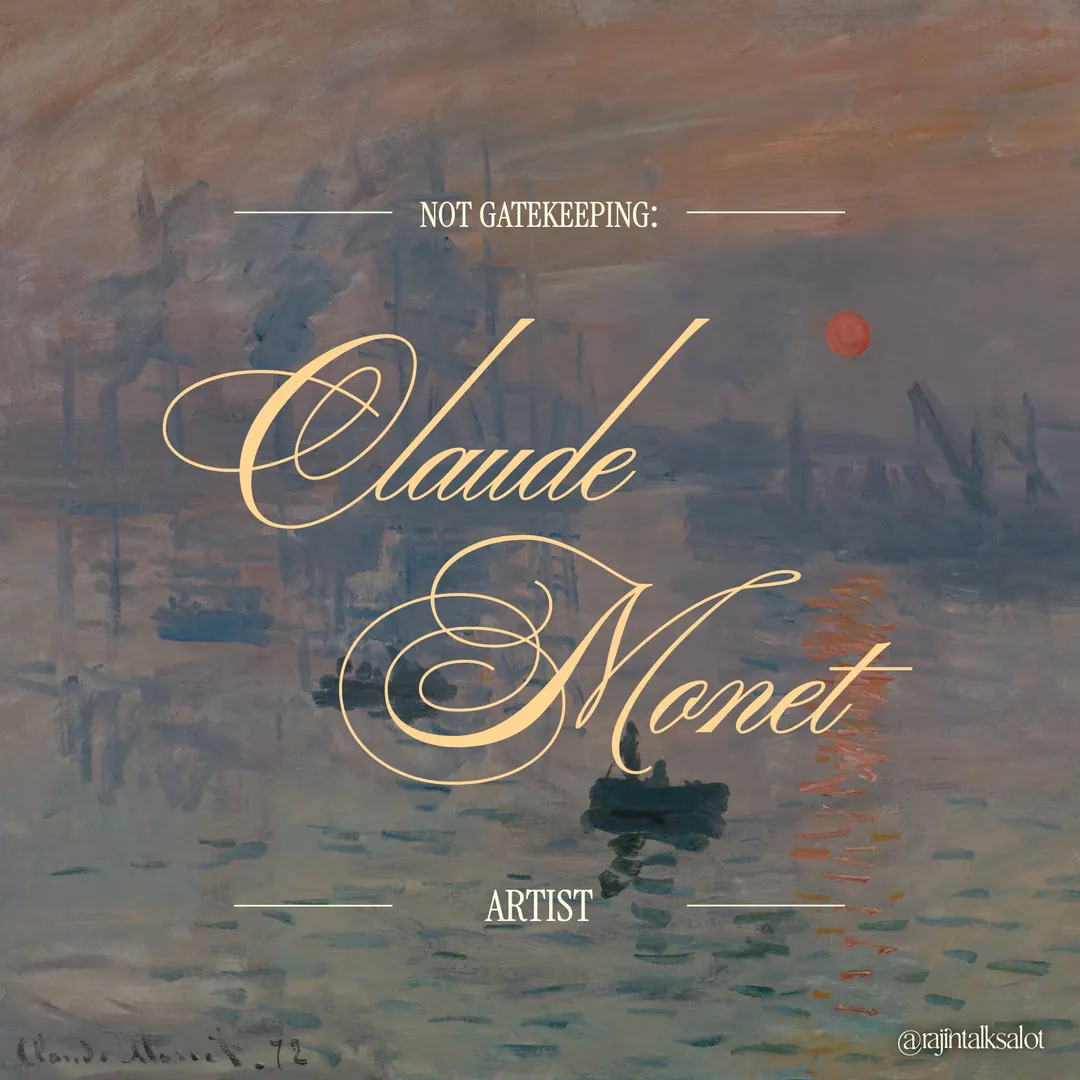
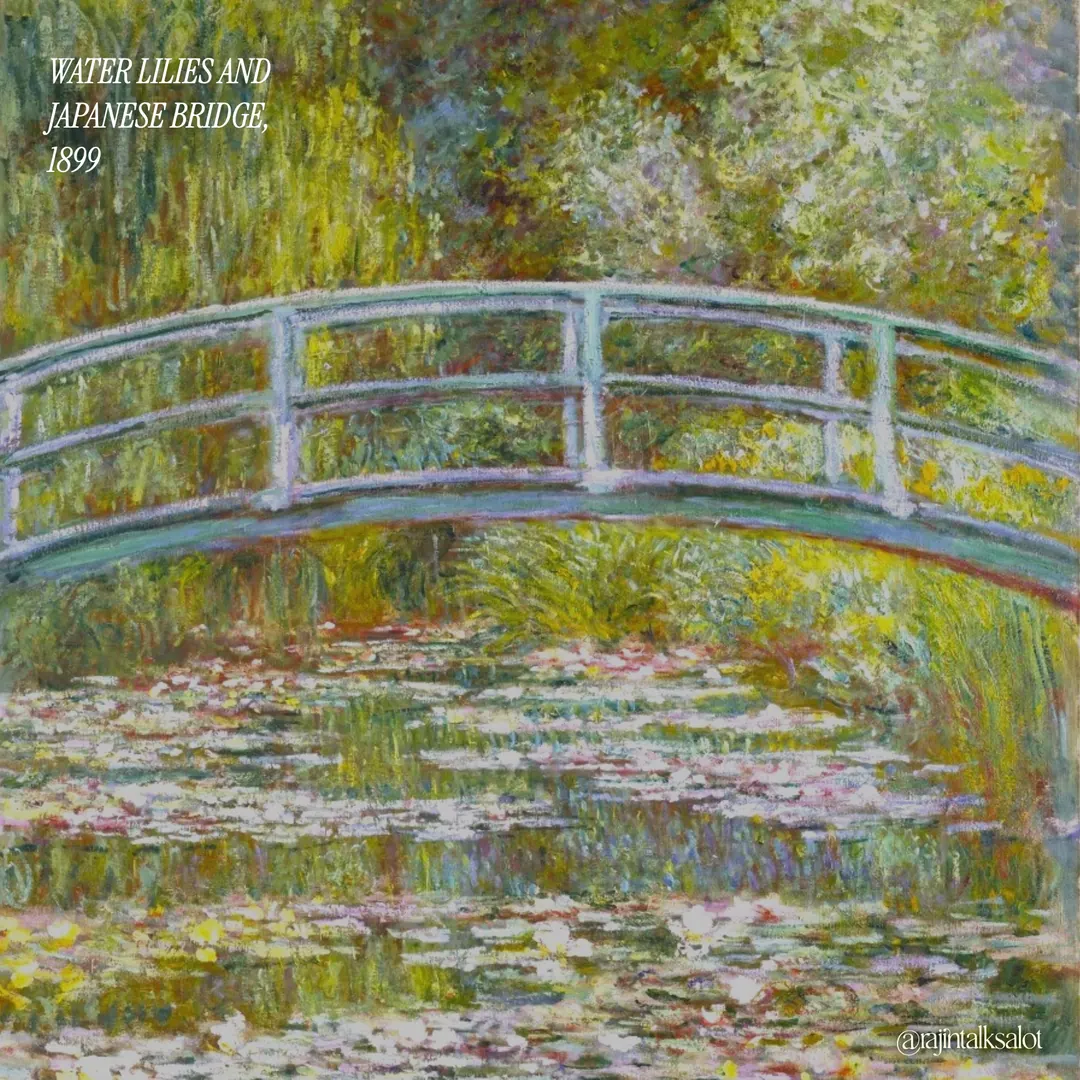
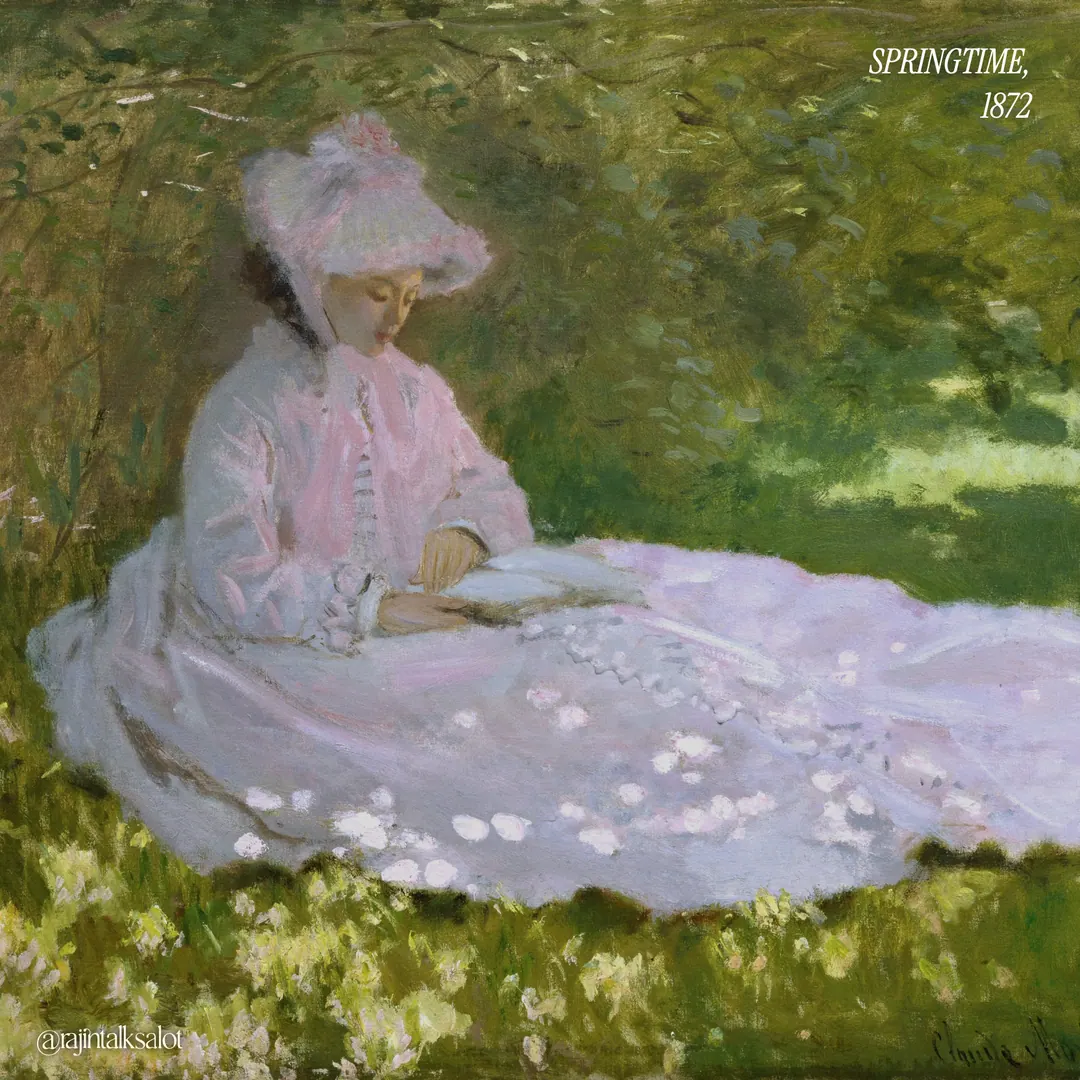
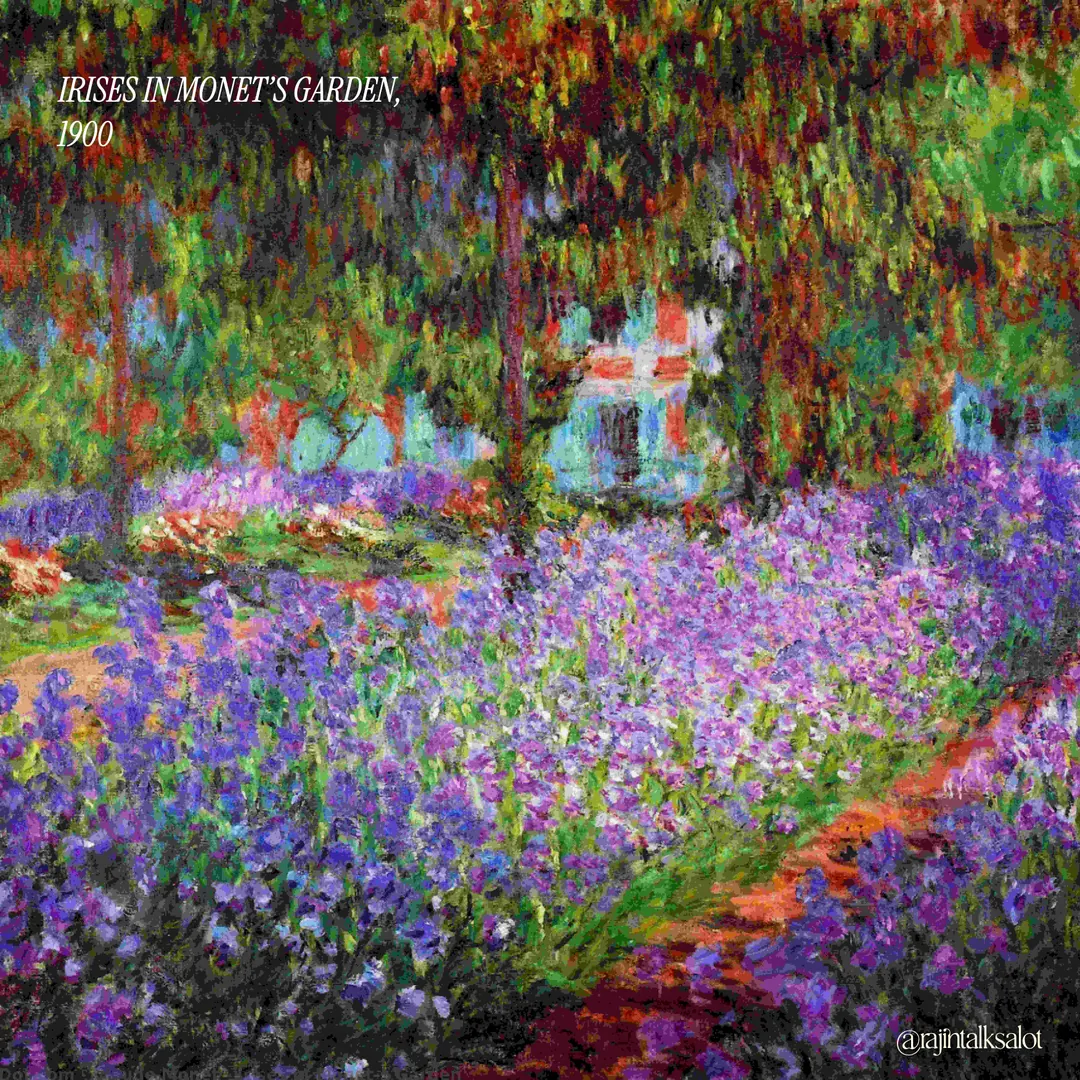
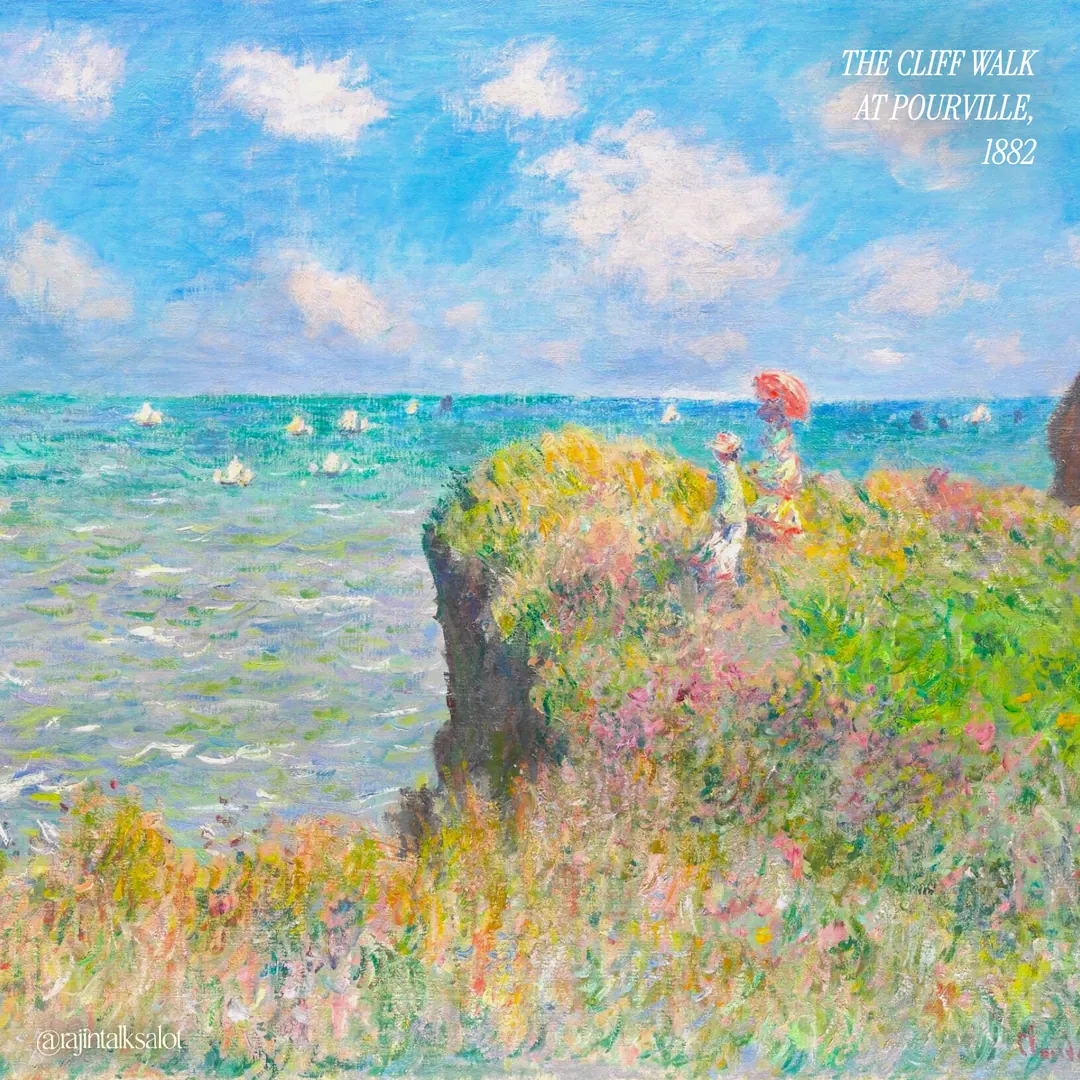
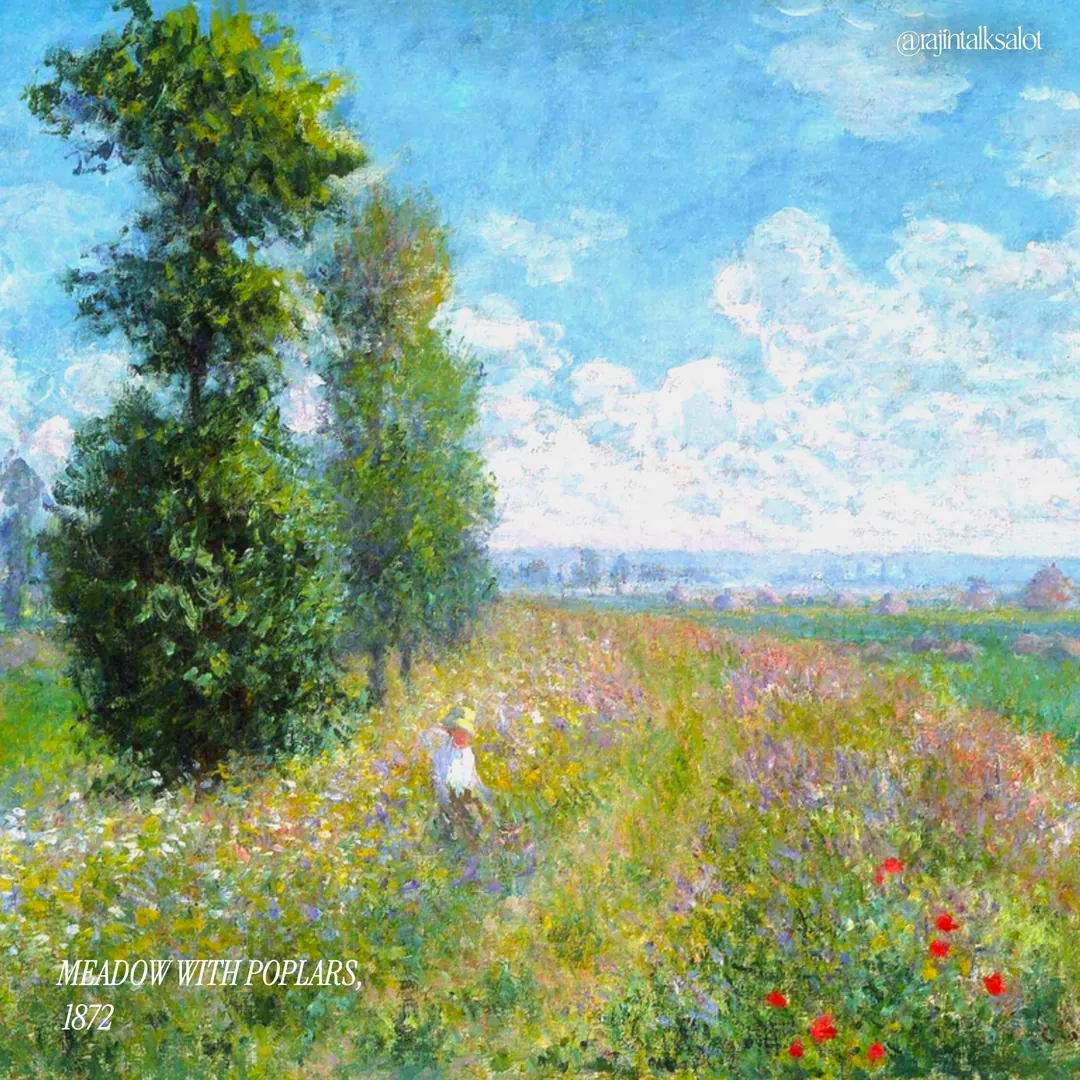
💫 Not Gatekeeping: Claude Monet (1840-1926), the French Painter, came to be known for his works as the ‘Father of Impressionism’.
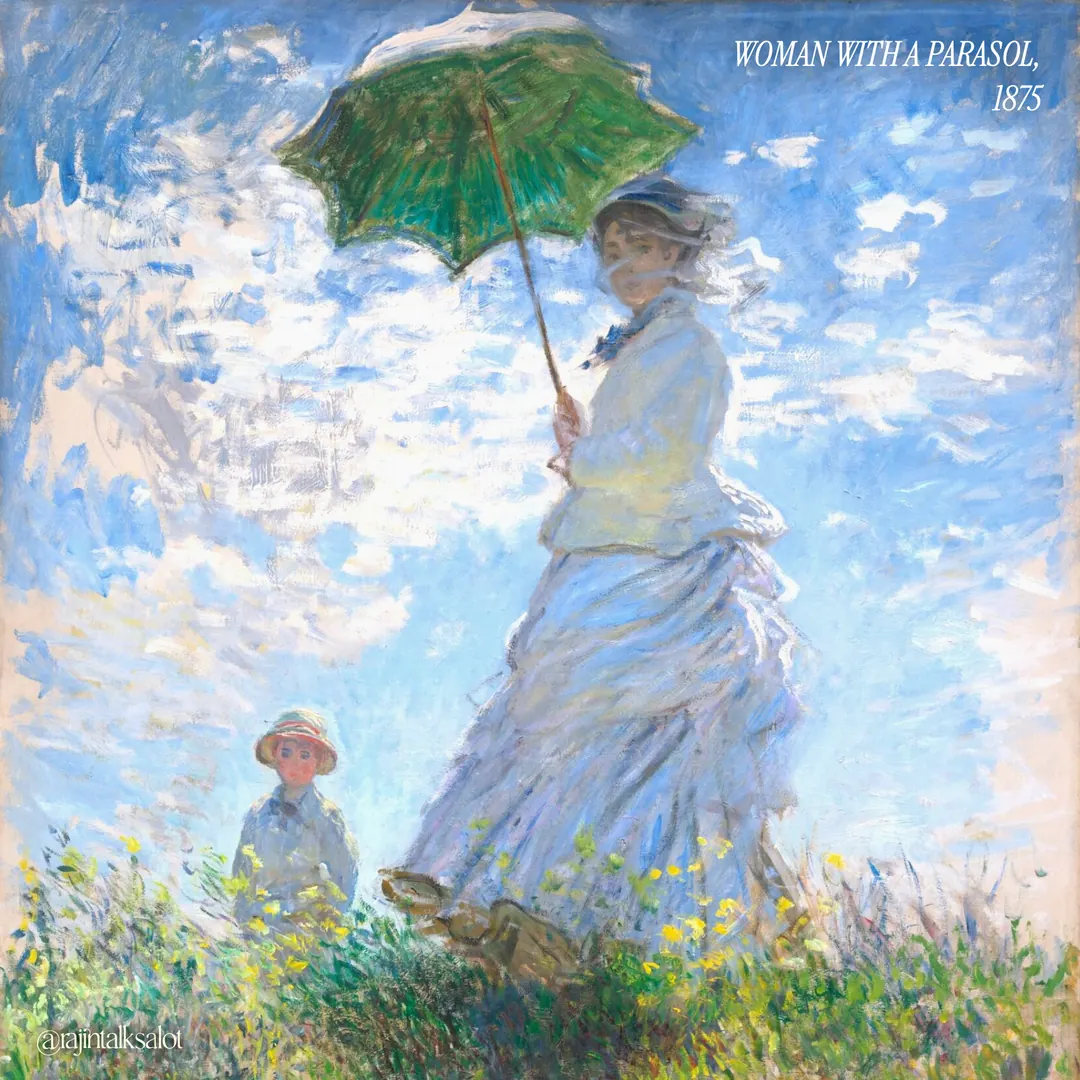
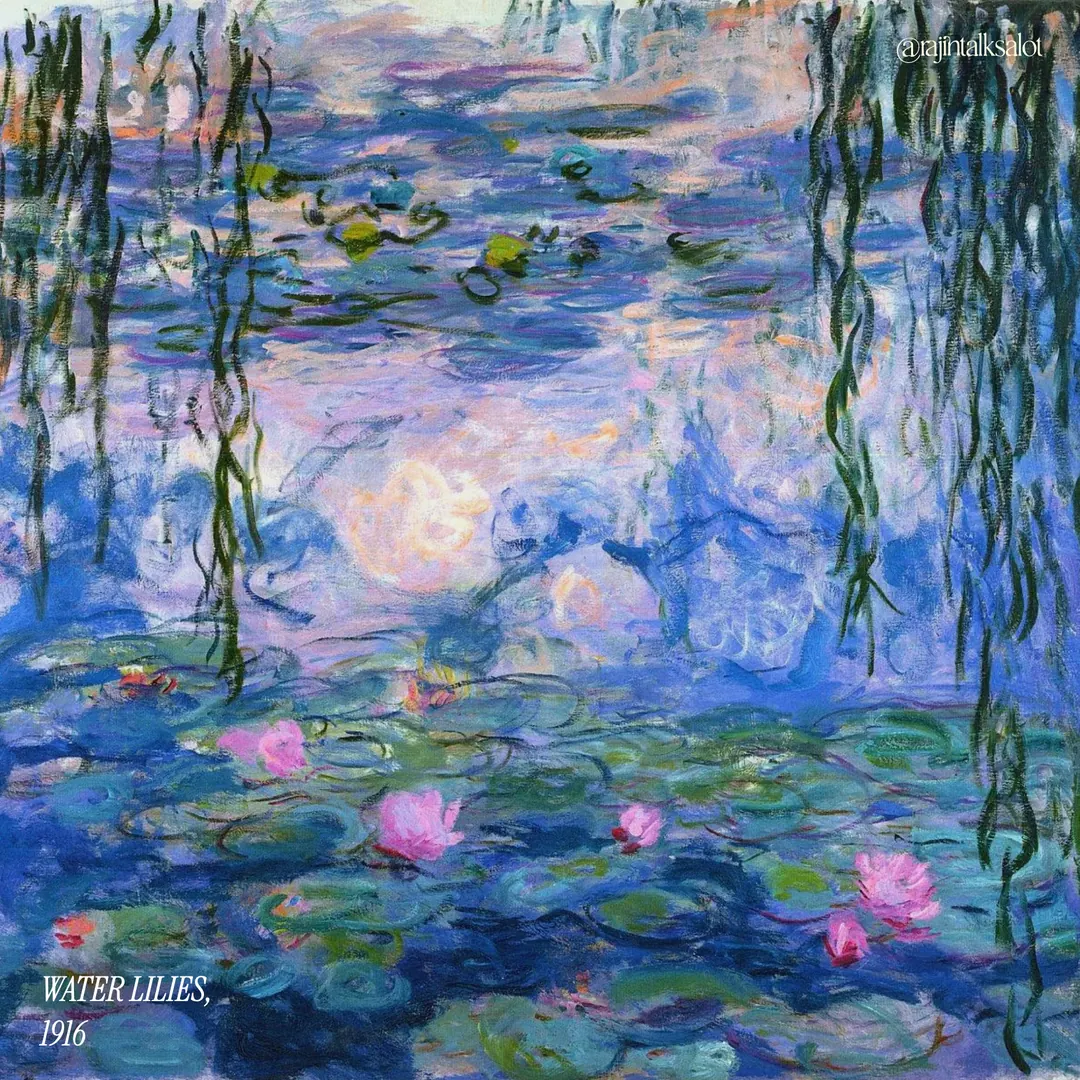
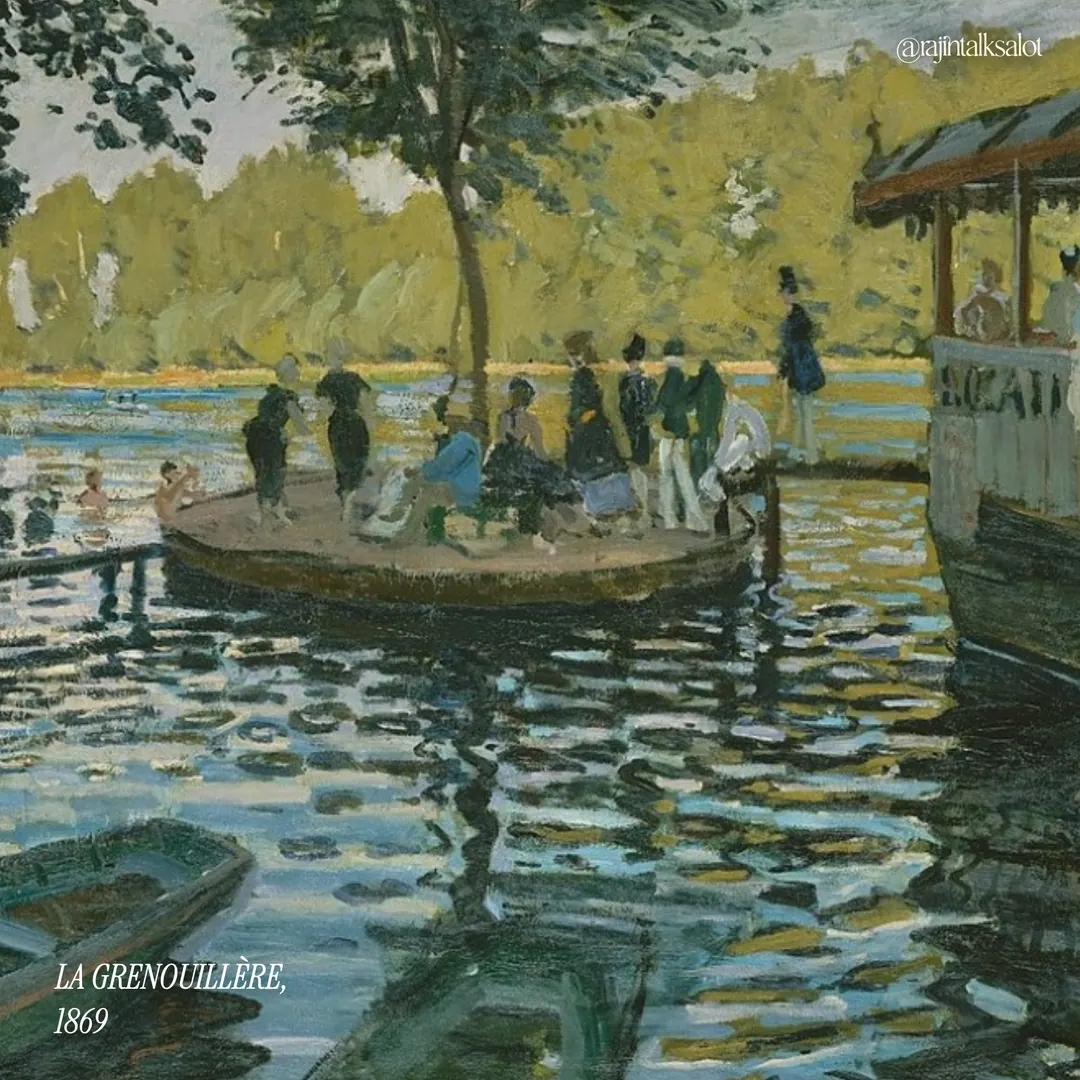
Impressionism, which emphasizes thin, visible brush strokes, with focus on nature and lighting, lets the overall shape take form when viewed from a distance. This was a breath of fresh air in the Mid-19th Century in Europe, when the air of France was seemingly exhausted from the grandeur and extravagance of Neoclassicism and Rococo artwork.
Monet, taking inspiration from the likes of Gustave Courbet, and Eugene Boudin, really emphasized the idea of ‘en plein air’, or simply put, open-air painting. The idea of such an obvious concept being “emphasized” may seem silly, but at the time, paint was notoriously hard to carry around, often having to be carried in pig bladders (yes, you read that right). This led to artists preferring to paint indoors in their own studios.
But Monet took the time and the effort to always paint outdoors, believing that the light, the change in colors we see with our eyes in the moment, the intricacies, the vibrancy of it all, would be impossible to recreate from memory. His obsession for painting out in nature, basking in its light, and falling in love with it, really reflects in his work.
Each brush stroke tells of a detail his eyes caught in that moment, each intentional pigment reveals an embellishment he added in with love, and often the vibrant exaggeration of color and lighting only work in harmony to give us something no photograph could ever recreate.
I’ll end with a quote from Monet:
“Everyone discusses my art and pretends to understand, as if it were necessary to understand, when it is simply necessary to love.”
(PS: It’s his birthday tomorrow.)