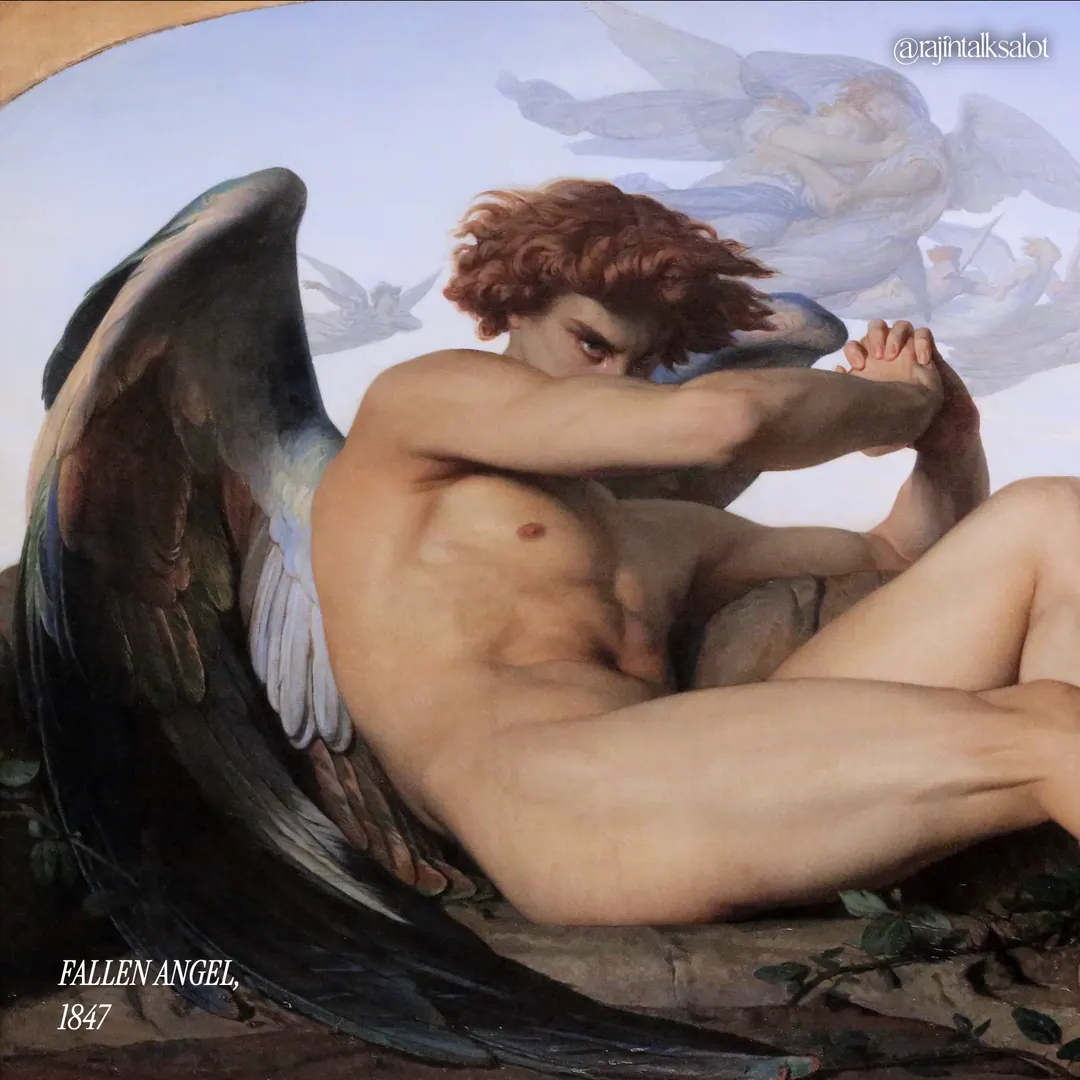
🤿 Media Dives: Alexandre Cabanel’s ‘Fallen Angel’ (L'Ange déchu, 1847) is widely regarded as one of the most recognizable paintings of all time. The subject, Lucifer, displays a plethora of emotions for us to dissect. As usual, I think bit of context is important to understand this piece.
Cabanel was an academic art prodigy. His paintings were well appreciated (from his regular Paris Salon exhibitions), but seemed to lack emotion, which brought him to his painting of Orestes (1846), which was heavily criticized. This drove Cabanel down a path of redemption on seeking the validation he had lost.
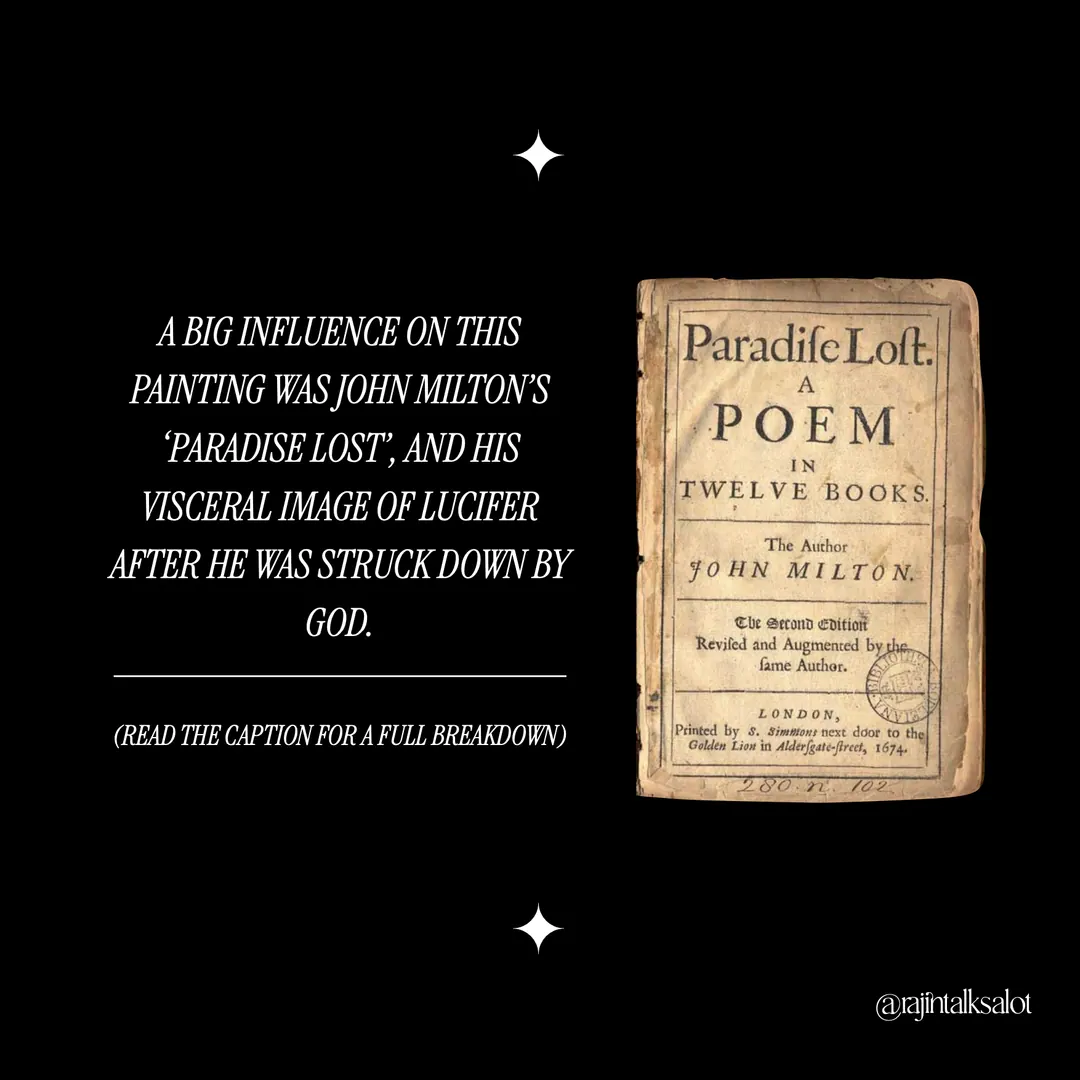
Work without influence does not exist. Quote me on that. But I bring it up to explain Cabanel’s motivation for the painting: ‘Paradise Lost’ (Book 1) by John Milton. I want to highlight the exact lines from the epic that struck me as his probable inspiration, as it had been for many artists before and after him:
“Dark'n'd so, yet shon Above them all th' Arch Angel;
but his face, Deep scars of Thunder had intrencht,
and care Sat on his faded cheek,
but under Browes Of dauntless courage, and considerate Pride
Waiting revenge: cruel his eye,
but cast Signs of remorse and passion
to behold The fellows of his crime,“
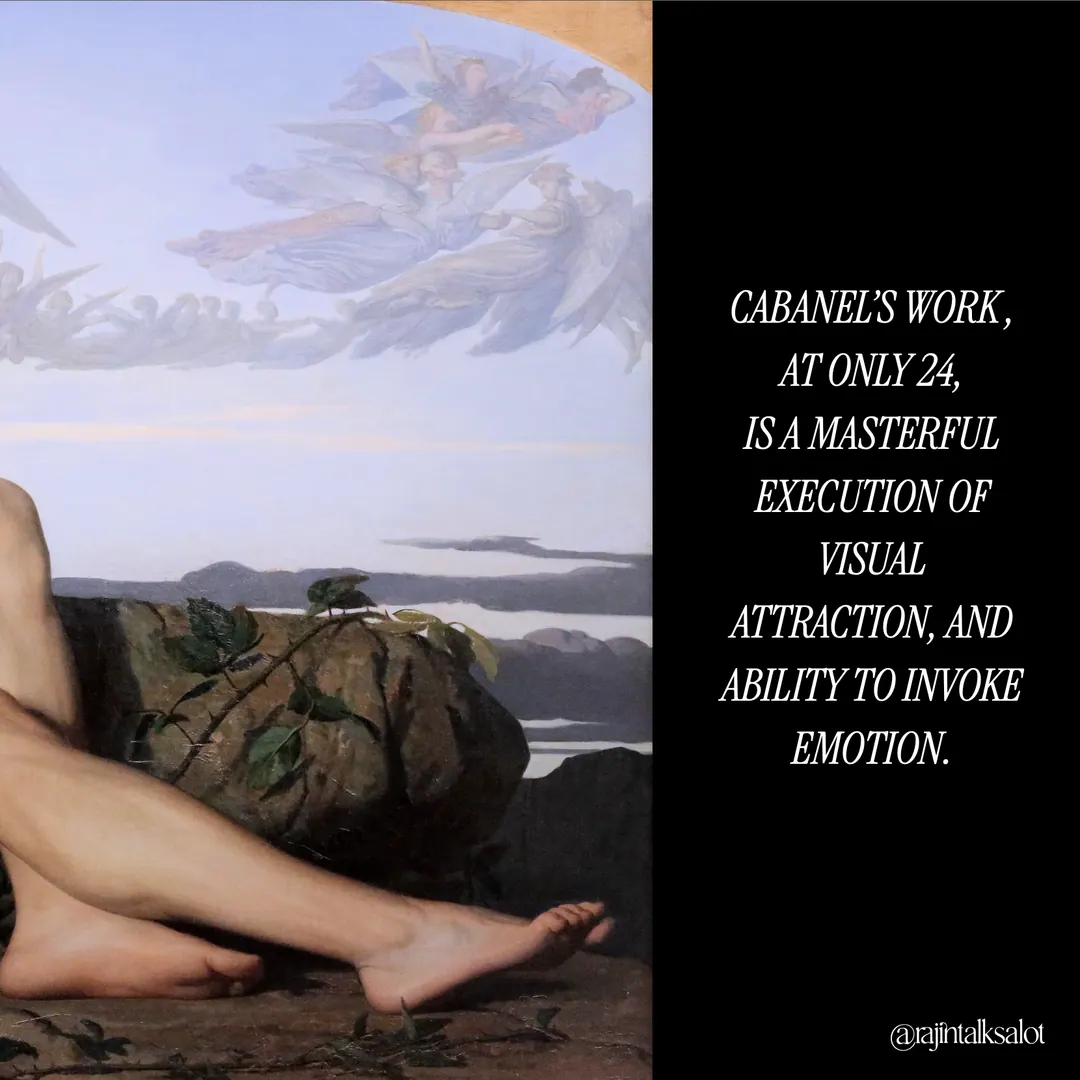
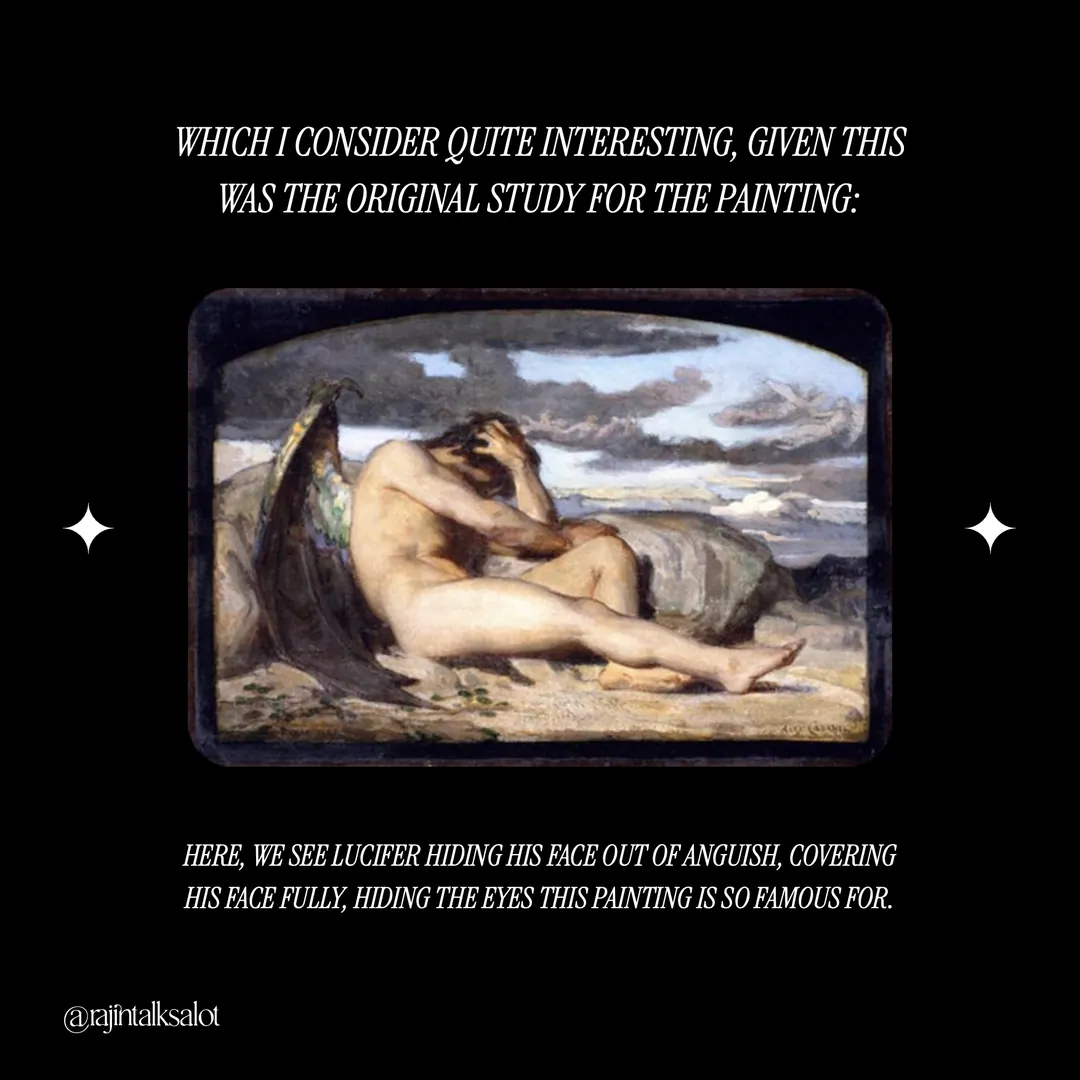
Mirroring the poetry, Lucifer reclines on top of a mountain, having been cast down from above. His muscles, tensed, contradict his reclined state; as he tries to hide his face.
The only visible part, his eyes, convey so much. His anger, his vengeance, his hurt pride are apparent; but the teardrops streaming down both his eyes scream out shame.
The visceral rage I feel from him reminds me of an angered child, so often crying in both fury and disbelief after being reprimanded. His emotions feel so humane, so relatable, reflecting Cabanel’s anger and sadness too.
But perhaps Cabanel intended his perfect physique, his relatability, the light shining solely on his body (which may seem like a mistake), to show us how alluring and manipulative Lucifer can be, in trying to make us sympathize with his anger.
This masterpiece was practically spat on during its exhibition for being ‘too romantic’, and ‘too emotional’. Can you fucking believe it?